


Practical Ways to Find Calm Reduce Stress and Live Happier

A quiet mind can feel out of reach when the day starts with notifications, obligations, noise, and a running list of things left undone. Yet inner peace is not reserved for people with perfect routines or calm surroundings. It is a skill, a state of steadiness that can grow with practice.
Inner peace, also known as internal calmness, is the ability to feel grounded within yourself even when life feels uncertain, busy, or emotionally charged. It does not mean you never feel stress, sadness, frustration, or fear. It means those feelings do not have to control every thought, choice, or reaction.
At its core, inner peace is a steady relationship with your own mind. It allows you to pause before reacting, return to balance after difficulty, and move through life with more clarity. For mental and emotional well-being, that kind of calm matters deeply.
This article is for general information only and is not a replacement for professional mental health support. If stress, anxiety, or low mood feels overwhelming or persistent, reaching out to a qualified professional can be an important step. Read on to learn more about how to find calm, reduce, stress and live happier.

What inner peace really means
Inner peace is often misunderstood as a life without problems. That idea can make calm feel impossible, because real life includes bills, illness, family needs, work pressure, grief, change, and hard decisions.
A better definition is this: inner peace is the ability to remain connected to yourself while life continues to move around you.
It shows up in simple ways:
Taking a breath before answering a difficult message
Noticing stress in your body without immediately spiralling
Accepting that some things are outside your control
Choosing rest without guilt
Letting a mistake teach you instead of define you
Feeling emotion without being swallowed by it
Inner peace is not passive. It does not mean ignoring injustice, avoiding responsibility, or pretending everything is fine. In fact, calm often helps people respond more wisely. When the mind is less crowded, it becomes easier to see what matters and what can be released.
Think of a snow globe. When shaken, everything inside becomes cloudy. If left still, the snow slowly settles and the scene becomes clear again. Inner peace works in a similar way. The goal is not to stop life from shaking the globe. The goal is to learn how to let the mind settle.
Why inner peace matters for mental and emotional well-being
Mental and emotional well-being depends on more than feeling happy. It involves resilience, self-trust, emotional flexibility, and the ability to recover after stress. Inner peace supports all of these.
Find Calm Reduce Stress and Live Happier
When you feel internally calm, you are more likely to notice what is happening inside you before reacting to what is happening outside you. That small pause can change the tone of an entire day.
It helps regulate stress
Stress is a normal response to pressure or threat. In short bursts, it can help with focus and action. But when stress becomes constant, the body and mind can feel stuck in high alert.
Inner peace helps by creating space between a stress trigger and your response. Instead of moving straight into panic, anger, or overwhelm, you can pause and ask:
What is actually happening?
What is within my control?
What do I need right now?
What is the next small step?
That pause may seem simple, but it can reduce the feeling of being swept away. Over time, calming practices can help the nervous system return to balance more easily after pressure.
It improves focus
A scattered mind burns energy quickly. When thoughts jump from one worry to the next, even simple tasks can feel heavy.
Inner peace supports improved focus because it reduces mental clutter. Calm does not remove every distraction, but it makes it easier to return to the present moment. That can help with studying, parenting, creative work, listening, decision-making, and daily problem-solving.
Focus grows when attention has somewhere concrete to land and when it does you will
find calm reduce stress and live happier
It supports emotional resilience
Emotional resilience is the ability to bend without breaking. Inner peace strengthens that ability by making emotions feel less threatening.
A person with inner calm can still feel anger, grief, or disappointment. The difference is that those feelings are seen as temporary experiences rather than permanent truths. This makes it easier to process emotions instead of avoiding them or acting them out.
It can increase overall happiness
Happiness is often treated as something to chase. Inner peace offers another path. It helps people notice small moments of contentment that might otherwise pass unnoticed.
A warm drink. A quiet walk. A sincere conversation. A comfortable bed. A task completed. A deep breath after holding tension all day.
These moments may not look dramatic, but they become easier to appreciate when the mind is less busy fighting itself.

How inner peace reduces stress in daily life
Inner peace changes your relationship with stress. It does not erase deadlines, traffic, difficult conversations, or uncertainty. It changes the way those moments move through you.
One of the biggest stress amplifiers is resistance. This happens when the mind argues with reality:
“I should not have to deal with this.”
“This always happens.”
“I cannot handle it.”
“What if everything goes wrong?”
These thoughts are understandable, but they can add extra suffering to an already hard moment. Inner peace creates room for a different response:
“This is difficult, and I can take one step.”
“I do not like this, but I can stay steady.”
“I can feel upset without making the situation worse.”
This kind of thinking is not false positivity. It is grounded honesty. It allows the mind to stay connected to what is real and useful.
The body plays a major role
Stress is not only mental. It lives in the body as tight shoulders, shallow breathing, clenched jaws, headaches, restlessness, stomach discomfort, or fatigue.
That means inner calm often begins physically. You can use the body as an entry point when thoughts feel too loud.
Try this simple grounding practice:
Place both feet flat on the floor.
Relax your shoulders as much as you can.
Breathe in slowly through your nose.
Exhale longer than you inhale.
Name three things you can see.
Notice one place in your body that feels supported.
This takes less than a minute. It does not solve every problem, but it sends the body a message: there is safety in this moment.
Calm choices build on each other
Stress often grows through small daily patterns. So does peace.
A few calmer choices can shift the whole day:
Answering one message at a time
Taking a short walk before making a decision
Turning off notifications during meals
Pausing before saying yes
Going to bed before exhaustion takes over
Drinking water before reaching for another coffee
Leaving five extra minutes instead of rushing
Small choices matter because they teach the nervous system what steadiness feels like.
Practical ways to cultivate inner peace
Inner peace grows through repetition, not perfection. The goal is to build practices that fit real life. A peaceful routine that only works on ideal days will not last. Start small, make it personal, and return to it often.
Practice mindfulness in ordinary moments
Mindfulness means paying attention to the present moment with less judgement. It does not require incense, silence, or a long retreat. It can happen while washing dishes, walking to the bus stop, stretching, cooking, or sitting in the car before going inside.
Try choosing one daily activity and giving it your full attention.
While washing your hands, notice:
The temperature of the water
The feeling of soap between your fingers
The sound of the tap
The movement of your breath
The sensation of your feet on the floor
When the mind wanders, gently return. Wandering is not failure. Returning is the practice.
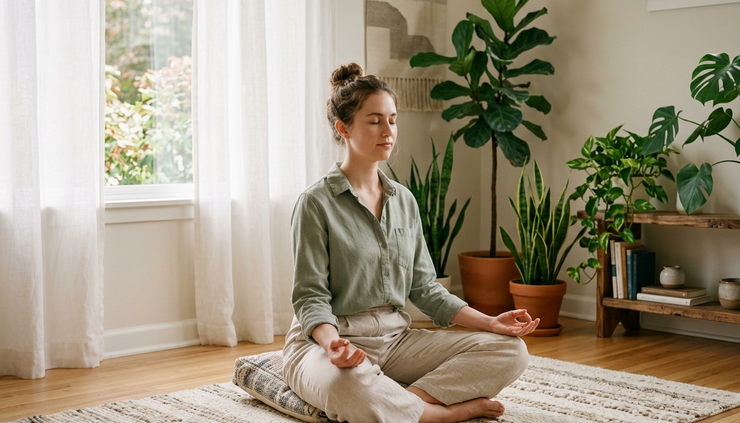
Build a simple meditation habit
Meditation is one of the most well-known tools for inner peace, but many people give up because they think they are doing it wrong. A busy mind during meditation is normal. The practice is not to empty the mind. The practice is to notice thoughts and come back.
Start with three to five minutes.
A basic meditation can look like this:
Sit comfortably.
Close your eyes or soften your gaze.
Notice your breath.
When thoughts appear, label them gently as “thinking.”
Return to the breath.
End by noticing how your body feels.
You can meditate in a chair, on a cushion, or even while standing. Consistency matters more than appearance. A few minutes each day can be more useful than one long session once in a while.
Use self-reflection to understand your inner world
Self-reflection helps turn vague tension into clear information. When emotions stay unnamed, they often feel bigger. Writing or thinking honestly can help you understand what is happening beneath the surface.
Try journaling with prompts such as:
What am I carrying today?
What do I need to release?
What is asking for my attention?
Where am I being too hard on myself?
What would a kinder response look like?
What is one thing I can control right now?
Writing does not have to be polished. Spelling, grammar, and structure do not matter. The point is to listen to yourself without rushing to fix everything.
Set boundaries that protect calm
Inner peace becomes harder when life is crowded with unspoken resentment, overcommitment, and constant access. Boundaries protect your energy, time, and attention.
A boundary can sound simple:
“I cannot take that on this week.”
“I need some time to think before I answer.”
“I am not available after 8 p.m.”
“I want to keep this conversation respectful.”
“I need a quiet evening tonight.”
Boundaries are not selfish. They are part of emotional hygiene. They help prevent burnout and make room for more honest relationships.
Spend time in nature when possible
Nature offers a calm rhythm that many people find grounding. A walk under trees, a few minutes near water, or even sitting by an open window can help shift attention away from repetitive thoughts.
In Canada, the seasons can shape this practice. A summer walk, an autumn trail, a snowy afternoon, or the first mild day of spring can each offer a different kind of stillness.
If getting outdoors is difficult, bring nature closer:
Keep a plant near a bright window
Listen to rain or birdsong
Open a window for fresh air
Notice the sky for one full minute
Sit where natural light reaches you
The point is not to escape life. It is to remember that life is larger than the current worry.
Reduce input when your mind feels full
The mind needs quiet space to settle. Constant input can make inner peace difficult, especially when the day includes news, messages, entertainment, noise, and multitasking.
Try a short “quiet window” each day. It could be 10 minutes with no phone, podcast, television, or scrolling. Let the mind breathe.
At first, silence may feel uncomfortable. That is normal. Restlessness often appears when the mind finally has room to be heard. Stay gentle with yourself. Over time, quiet can become nourishing instead of awkward.
Practise acceptance without giving up
Acceptance is often confused with approval. They are not the same. Acceptance means seeing reality clearly enough to respond well.
You can accept that something happened without liking it. You can accept a painful feeling without wanting it to stay. You can accept uncertainty without stopping yourself from taking wise action.
A helpful phrase is:
“This is here right now. I can meet this moment one breath at a time.”
Acceptance softens the struggle against what already exists. That frees energy for what can be done next.
Common barriers to inner peace and how to work with them
Even with good intentions, inner peace can feel difficult. That does not mean you lack discipline. It means you are human.
The mind keeps racing
A racing mind often needs a physical anchor. Try slow breathing, walking, stretching, or placing a hand on your chest. If thoughts keep coming, write them down. Getting them onto paper can reduce the feeling that you must hold everything at once.
Guilt appears when you rest
Many people feel guilty when they slow down. Rest can seem unproductive, especially when there is always more to do.
Try reframing rest as maintenance. Phones need charging. Cars need fuel. Bodies and minds need recovery. Rest supports responsibility rather than taking away from it.
Emotions feel too strong
When emotions feel intense, aim for steadiness rather than instant calm. Lower the pressure. Drink water, step outside, breathe slowly, or name the feeling out loud.
“I feel anxious.”
“I feel hurt.”
“I feel overwhelmed.”
Naming an emotion can create distance from it. You are not the feeling. You are the person noticing the feeling.
Life is genuinely difficult
Inner peace does not deny hardship. Some seasons are heavy. Financial strain, caregiving, conflict, illness, grief, or major change can make calm feel far away.
In those times, think of peace as a small shelter, not a permanent destination. A single breath, one supportive conversation, a shower, a meal, or five minutes of quiet can still matter. Small moments of calm are not meaningless just because life is hard.

A simple daily routine for more internal calmness
A peaceful life is built through repeated moments. Here is a realistic routine that can fit into many types of days.
Morning
Before checking your phone, take three slow breaths. Ask yourself, “What kind of energy do I want to bring into today?” Choose one word, such as steady, patient, open, or kind.
Midday
Pause for one minute. Relax your jaw. Drop your shoulders. Look away from screens or tasks. Notice your body. Ask, “What do I need before I continue?”
Evening
Write down one thing you handled, one thing you felt, and one thing you can release. This helps the mind close the day instead of carrying every loose thread into sleep.
Anytime stress rises
Use the phrase, “One breath, one step.” Then do the next useful thing. Not the whole plan. Not the whole week. Just the next step.
This kind of routine is simple on purpose. Inner peace grows best when the practice is easy enough to repeat.
The takeaway on finding calm and living happier
Inner peace is not a perfect mood, a flawless routine, or a life without stress. It is the steady inner ground that helps you meet life with more clarity, patience, and self-trust.
When internal calmness grows, stress becomes easier to manage. Focus improves because the mind has less noise to fight through. Happiness becomes more available because attention returns to the present, where small joys actually happen.
Start with one practice today. Take three slow breaths. Sit quietly for five minutes. Write one honest sentence in a journal. Step outside and notice the air. Choose a kinder thought when self-criticism appears.
Peace rarely arrives all at once. More often, it is built in small, faithful returns to yourself.


Comments